Home › Industrial Floors and Specialty Slabs
Support heavy production with industrial concrete floors in Augusta, GA. We build high load slabs, superflat floors, and specialty surfaces for manufacturing, cold storage, and processing plants. Careful design, subgrade prep, and finishing help meet strict performance requirements.
Superior Concrete Augusta provides professional industrial concrete floor throughout Augusta, GA, Georgia and the surrounding area. Our licensed, insured crew delivers safe, clean, on-time work with a free estimate before anything begins. Call (706) 809-6228 or request your free quote.
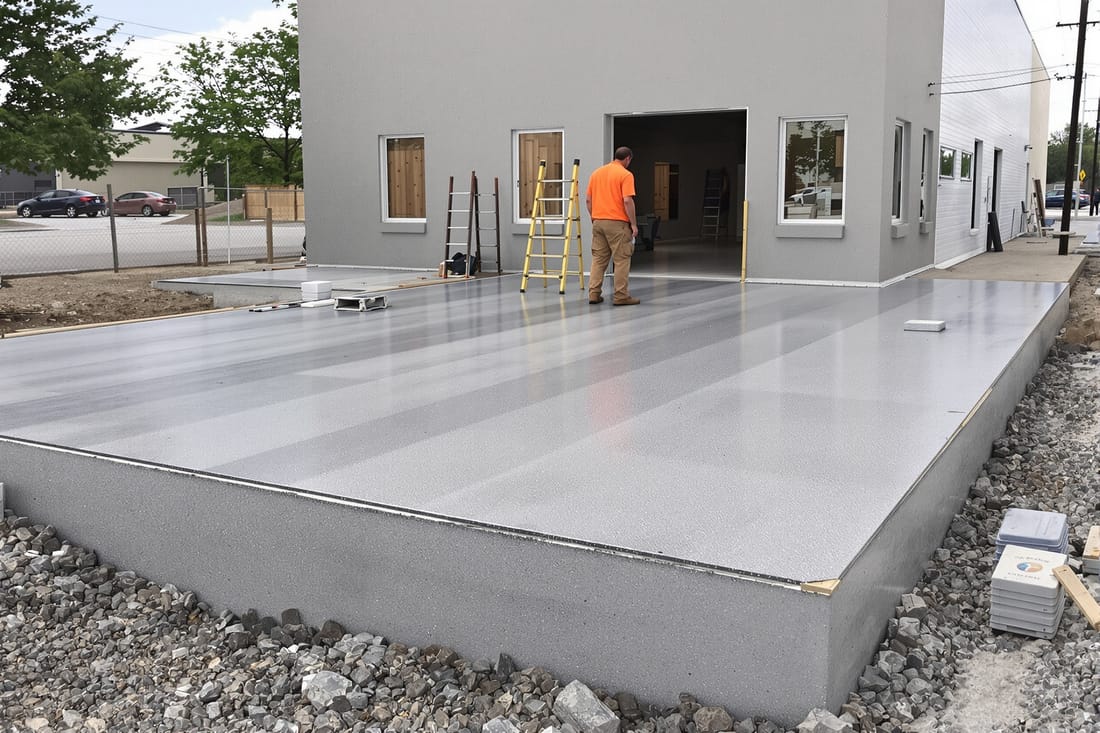
Industrial Concrete Floors Built for Real Augusta Conditions
Industrial floors in Augusta are exposed to heat, humidity, forklift traffic, chemical spills, and constant cleaning. Superior Concrete Augusta builds industrial concrete floors that are engineered for these real-world conditions, not just for looks on day one.
When we design an industrial concrete floor, we start with the purpose of the space. A warehouse that runs electric forklifts needs a different slab than a food plant with constant washdowns or a fabrication shop with point loads from machinery. We look at your racking layout, wheel loads, impact areas, and where you may add or move equipment later. This planning stage directly affects slab thickness, reinforcement type, joint layout, and finish.
In the Augusta, GA area, temperature swings and clay-heavy soils place extra stress on slabs. Our designs account for moisture coming up from the subgrade, seasonal shrink and swell of native soils, and the way our hot summers accelerate slab curing. We select mix designs, vapor barriers, and reinforcement to match those specific site conditions. The result is an industrial concrete floor that retains flatness, handles your traffic, and resists curling and cracking as the building ages.
How We Build Industrial Floors and Specialty Slabs Step by Step
A durable industrial concrete floor is the product of a controlled process. Superior Concrete Augusta follows a defined sequence so each step supports the next.
First is investigation and layout. We review your plans, verify load requirements, and evaluate the existing subgrade. On many Augusta sites, especially redeveloped industrial properties, we test compaction and check for soft spots or old fill. Any weak areas are undercut and backfilled with engineered stone to reduce future slab settlement.
Next is subbase preparation. We place and compact a granular base, typically graded aggregate stone, to a specific depth. Where moisture control is critical, we install a high-quality vapor barrier with taped seams. For specialty slabs that will receive resin coatings or high-tolerance flatness requirements, this moisture control step is non-negotiable.
Reinforcement and joints come next. Depending on the application, reinforcement may be conventional rebar, welded wire mesh, or steel fibers. For large industrial floors we often use a combination of doweled construction joints and carefully spaced control joints, all laid out so they coordinate with column lines, equipment pads, and rack rows.
We then place and finish the concrete using laser-guided screeds when flatness tolerances are tight. Finishing varies by use. A troweled hard-trowel finish is common in distribution and manufacturing. For floors that will receive specialized coatings, we adjust finishing to promote proper adhesion and avoid burnished surfaces where a coating needs mechanical profile. Finally, we cure the slab properly, which in our climate often means using curing compounds and controlling air movement to reduce rapid moisture loss in hot or windy conditions.
Specialty Slabs for Heavy Loads, Equipment Pads, and Unique Uses
Specialty slabs are concrete floors with nonstandard performance requirements, and they are a significant part of what Superior Concrete Augusta provides. These may include heavily reinforced machine pads, thickened slabs beneath racking, slabs designed for constant wet exposure, or areas that will receive highly chemical-resistant coatings.
For heavy machinery pads, we start by reviewing manufacturer load data and anchoring requirements. We then design thicker sections with concentrated reinforcement, sometimes including double mats of rebar and added concrete strength. In fabrication shops around Augusta and North Augusta, we frequently install isolated equipment pads that are structurally separated from the surrounding slab to reduce vibration transfer.
Food and beverage operations and certain pharmaceutical or packaging facilities often need specialty slabs that withstand aggressive cleaning and exposure to sanitizers. For these, we focus on slope for drainage, consistent surface profile, and compatibility with urethane cement or epoxy flooring systems. We coordinate with your flooring or coating contractor so the slab surface, joint details, and curing method all line up with the coating manufacturer’s requirements.
Cold storage spaces and freezers require careful attention to insulation and vapor management. We can coordinate insulated slab assemblies and vapor barriers to keep warm, humid Georgia air from condensing where it should not. Without this planning, you can end up with frost heave beneath the slab or moisture issues at the floor surface.
Material Options, Finishes, and Performance Upgrades
An industrial concrete floor is not one-size-fits-all. Superior Concrete Augusta helps you choose mix designs and finish options that match your operation and budget.
Concrete strength is usually between 4,000 and 5,000 psi for standard industrial floors, but for very high point loads or areas with steel wheel traffic we may go higher. We can incorporate steel fibers for additional toughness, especially in slabs with fewer joints or in facilities that want to minimize steel reinforcement congestion.
Surface hardness and wear resistance can be upgraded with dry-shake hardeners or integral surface hardeners. These are useful in high-traffic forklift aisles, loading docks, and areas where dragging pallets is common. For Augusta warehouses that expect frequent renovations or layout changes, we often recommend hardeners plus a joint layout that keeps the highest wear inside aisles rather than under rack posts.
Finish options include standard hard-trowel, broom finish for exterior or semi-exposed areas, and polished concrete systems. Polished concrete is popular in distribution and light manufacturing spaces where dust control and easy cleaning are priorities. We also detail joint fillers and sealants based on use. Semi-rigid joint fillers protect joints from spalling under traffic, particularly in freezer rooms and high-speed material handling areas.
Chemical exposure is another consideration. Where oils, solvents, or caustic cleaners are present, we specify mixes and surface preparations that work well with epoxy, urethane, or other specialty coatings. Good coordination upfront avoids delamination and premature coating failures.
What Drives Cost and Schedule for an Industrial Concrete Floor
Many owners ask why industrial concrete floor pricing can vary so much. Superior Concrete Augusta explains costs clearly so you can make informed choices.
The main cost drivers are slab thickness, reinforcement type, concrete strength, and surface treatment. A 6 inch slab with mesh and basic trowel finish is significantly different, in cost and performance, from a 10 inch slab with double rebar mats, steel fibers, surface hardener, and tight flatness tolerance. Specialty slabs for heavy equipment or cold storage will cost more per square foot than standard warehouse floors.
Subgrade conditions matter. If your Augusta site has poor compaction, buried debris, or high groundwater, extra work is required before placing concrete. That might include more stone base, undercutting soft soils, or improved drainage. While these items add to upfront cost, they reduce the risk of slab settlement, cracking, and joint failure that would be far more expensive to repair later.
Schedule is affected by the size of pours, access for concrete trucks and pumps, and weather. In our region, summer heat and afternoon storms require early morning placements and sometimes phased pours. For high-performance specialty slabs, we may limit daily pour sizes to maintain quality. Curing time cannot be skipped. Even with high-early-strength mixes, there are realistic limits on when you can start racking installation or moving heavy equipment onto a new floor.
We work with you to align the floor work with other trades. Coordinating embedded conduit, drains, anchor bolts, and trench drains in advance reduces change orders and avoids last-minute slab cuts that undermine performance.
Common Problems, How We Prevent Them, and Why Local Experience Matters
Owners and facility managers in Augusta often reach out to us after living with poor industrial floors: curling slabs at dock doors, joints that break under forklifts, random cracks telegraphing through coatings, or floors that trap water instead of draining. Superior Concrete Augusta designs and builds to avoid these issues from the start.
Curling is common where thin slabs dry unevenly, especially along exposed edges and dock doors. We limit slump, use proper curing, and design mix proportions to control shrinkage. We also plan joint locations and reinforcement to manage movement rather than pretend it will not happen.
Joint damage under forklift traffic usually comes from unsupported joint edges, missing dowels, or the wrong joint filler. We use properly aligned dowels at construction joints and choose semi-rigid fillers that protect the joint arris yet remain flexible enough to move. On projects where the owner wants to run very small hard wheels, like VNA (very narrow aisle) systems, we pay extra attention to joint detailing and post-installation joint filling.
Random cracking often relates to poor joint spacing, inconsistent subgrade, or rapid moisture loss in our hot Georgia climate. We cut or form joints at the correct spacing for slab thickness, confirm compaction before every pour, and protect the slab from drying winds and direct sun during early curing.
Local conditions matter. Our humidity, clay soils, and temperature swings are not the same as what you see in other states. Superior Concrete Augusta has poured industrial concrete floors and specialty slabs across the CSRA, so we bring actual regional experience to each project, not generic national standards alone.